The Builder Insolvency Crisis: What It Means for Your Supply Chain
Construction insolvencies are at a post-COVID record. The cause is the supply chain — and the answer is to control it end-to-end rather than rely on the trade-supplier layer where the failures are concentrated.
Onyx Supply Co
Editorial · Procurement Desk
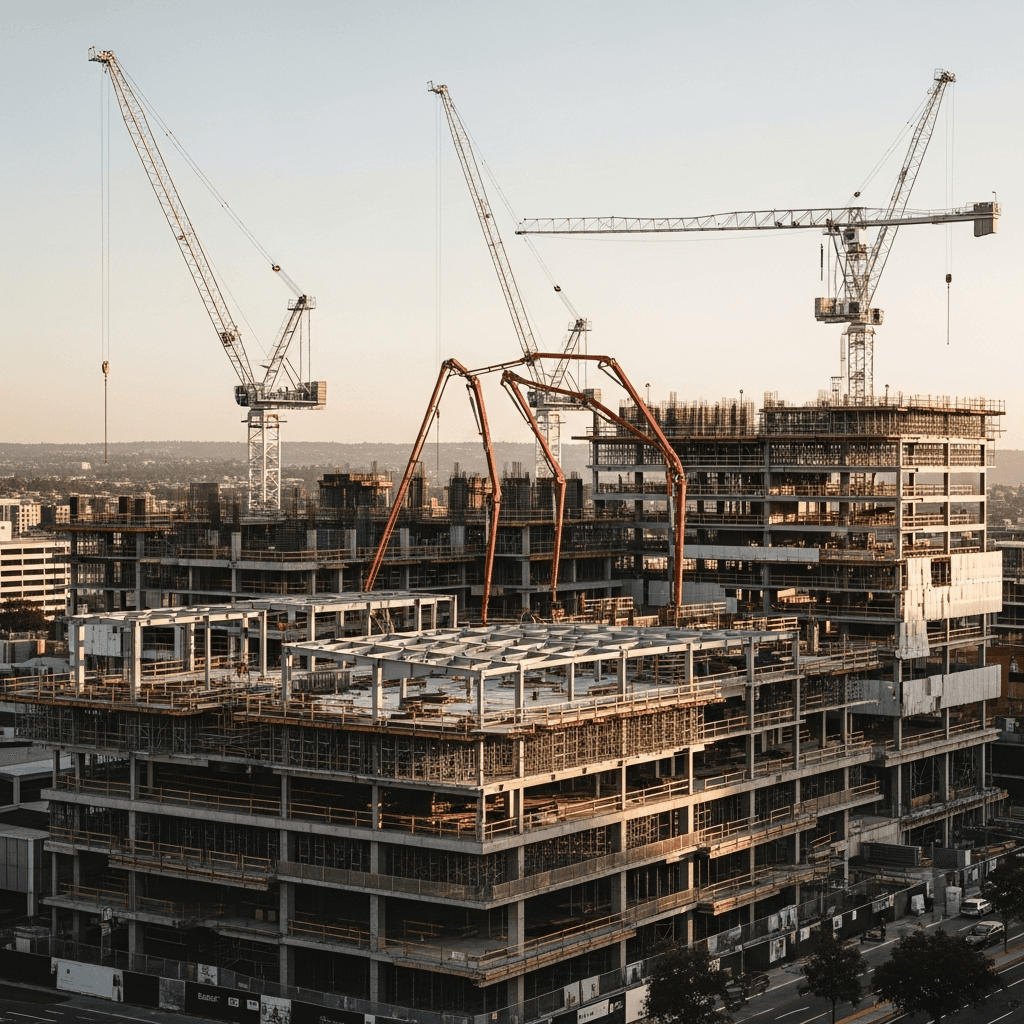
The Australian construction insolvency rate has stayed elevated for so long that there's a temptation to treat it as background noise. The data says we shouldn't. Master Builders Australia attributes the post-COVID record run to 40 per cent-plus cost inflation, supply disruptions, and labour shortages that haven't fully unwound. ASIC's reporting (via Altus Group) recorded nearly 1,900 construction insolvencies in the financial year to February 2026 — a continuation of the run, not a moderation of it.
Most analysis frames this as a builder problem. It's actually a supply chain problem that surfaces as builder failure. The trade-supplier layer — the intermediate sub-trades and material suppliers most builders depend on — is where the cost inflation, the supply disruption, and the labour shortage have hit hardest. When that layer fails, the builders relying on it fail too.
Why subcontractor failure cuts deeper
Altus Group has flagged a pattern that doesn't get enough attention: the impact on a project of subcontractor failure now exceeds the impact of main-contractor failure. A main-contractor failure triggers performance security, novation processes, and pre-existing administrative pathways. A subcontractor or material-supplier failure typically triggers an unplanned procurement event — the worst kind, where a critical-path package needs to be re-sourced under time pressure, at whatever price the market offers in the moment.
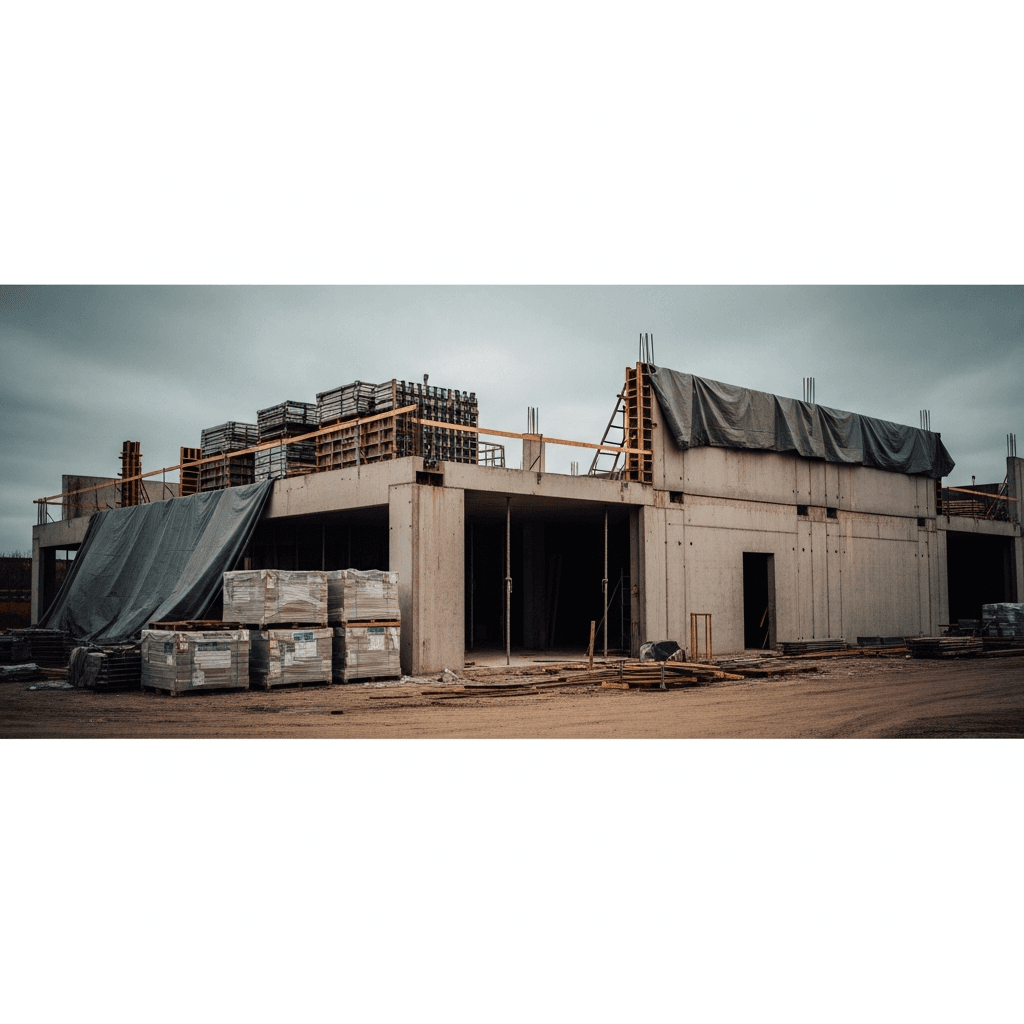
On a typical mid-tier project, a sub-trade failure on joinery, aluminium, or services packages can compress program by weeks and add five-figure or six-figure cost premia. Multiply that across the eight or twelve trade packages most projects carry, and the cumulative exposure to sub-trade insolvency becomes the dominant operational risk.
The structural answer
The structural answer isn't to underwrite the sub-trade layer. It's to depend on it less. Where a project's package can be delivered by a procurement partner that controls the supply chain from manufacturer to site — without the volatile intermediate trade-supplier layer — the exposure to sub-trade insolvency is removed entirely from that package.
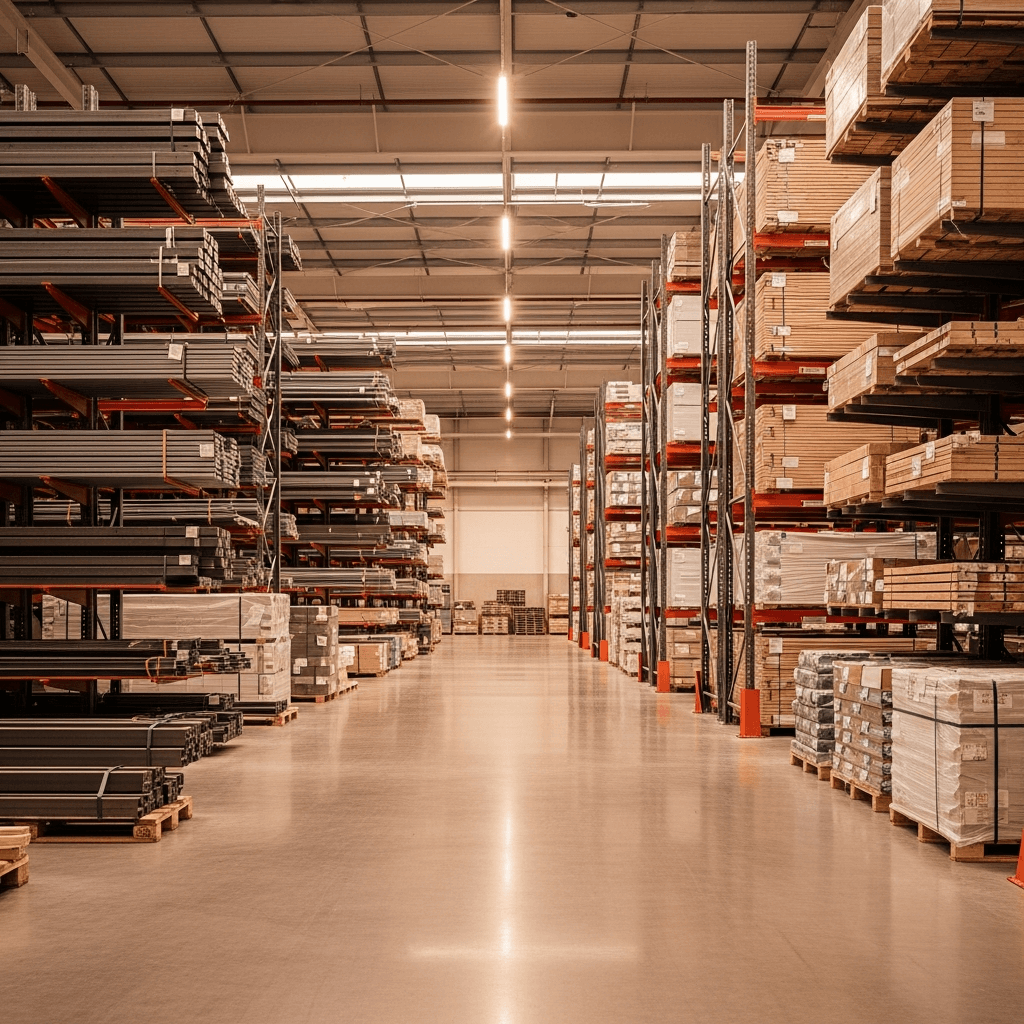
This is the model Onyx Supply Co operates. We take direct manufacturer relationships, run QA at the factory, manage Australian compliance certification, and deliver to site integrated with project program. The package is not at risk if a local trade supplier fails — there is no local trade supplier in the chain.
The wider context makes this more important than ever. The gap between housing approvals and completions has continued to widen, indicating that the supply chain isn't keeping pace with the demand pipeline — exactly the conditions in which sub-trade failures are most damaging. For builders and developers planning the next 12 to 24 months of activity, the procurement model is the supply-chain risk decision.
What to ask your procurement partner
Three questions separate procurement partners that meaningfully reduce supply-chain risk from those that don't. First: do you have a direct relationship with the manufacturer, or are you working through a trading company? Second: who manages QA, and at what stage of the process? Third: who certifies Australian compliance, and at what stage?
If the answers point to indirect manufacturer relationships, post-arrival QA, or wharf-stage compliance management, the risk profile is closer to traditional trade-supply procurement than the structural improvement the model promises. If the answers point to direct manufacturer contracts, factory-stage QA, and source-stage compliance, the model is doing what it's meant to.
In a market where construction insolvency is structural rather than cyclical, those answers are the supply-chain decision.
Want this analysis applied to your project?
Send us your specification and we'll come back with a cost-opportunity report — the same first step every Onyx engagement runs.